
Genetics

Introduction to Editing the Mouse Genome

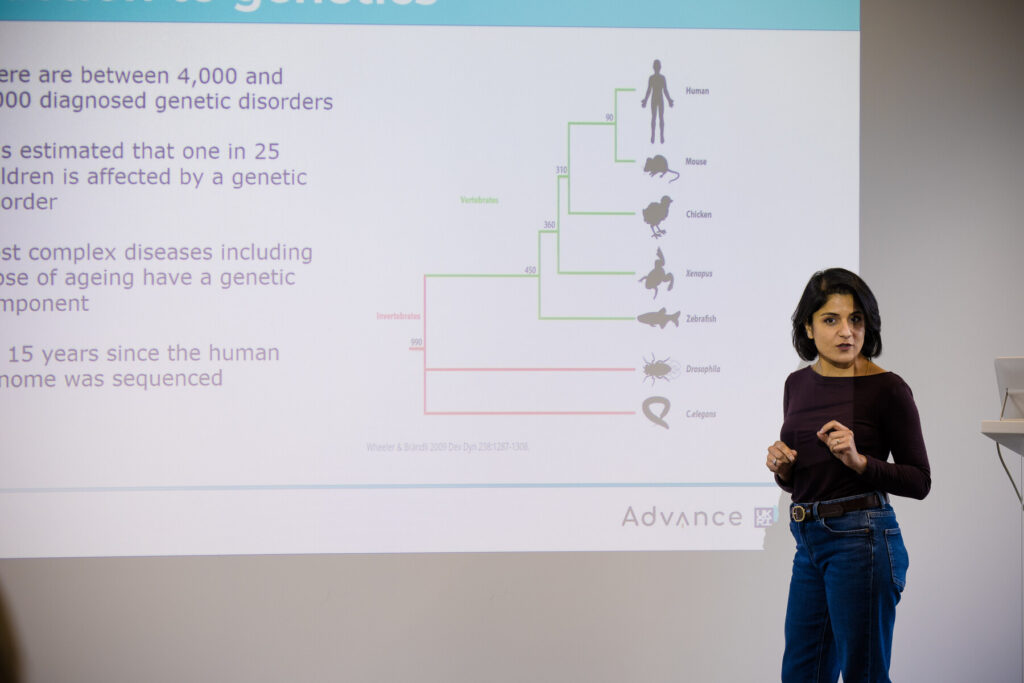
Designed for researchers and students new to genome editing, this course provides a practical foundation in creating and validating genetically altered mouse models. Explore genome editing design, screening approaches and best practices for line validation.

  • Genetics
  • 1 day
Tutor
Lydia Teboul
Availability
Register interest
Cost
£300
Duration
1 day

Course Overview

Genome editing of mice is widely used but can yield unpredictable outcomes. This course is designed to introduce the principles of design of genome editing, efficient strategies for screening of founder animals and comprehensive validation of newly established lines.

Who is it for?

  • Researchers
  • PhD Students

Includes

  • Understand the principles of design of CRISPR/Cas9 genome editing
  • Be aware of different strategies for screening founder animals
  • Understand validation strategies for newly established lines

Course details

Where

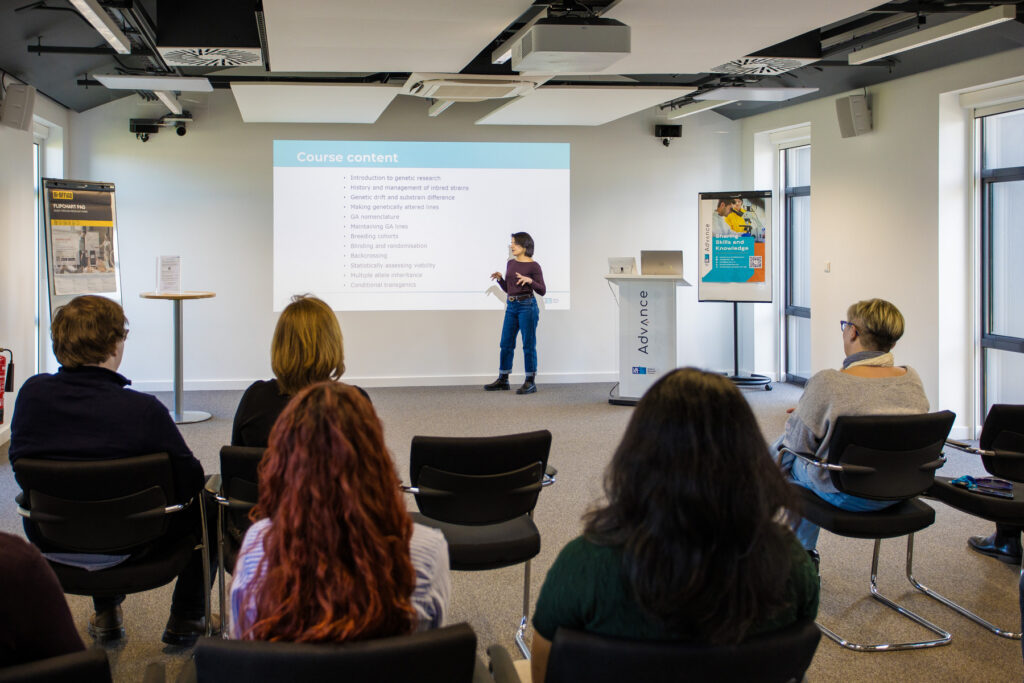
This course takes place at Advance, Harwell. You will be working in dedicated training spaces designed for practical scientific learning.

Format

This is a 1 day practical course built around active participation, demonstrations, and supervised technical work.

Level

Suitable for learners who want to translate scientific knowledge into stronger practical capability.

Availability

Open for booking

Cost

Course fee: £300. Contact the team if you need help exploring funding or team bookings.

Tutors

Meet Your Tutor

This course is taught by active practitioners who bring current methods, practical judgement, and real laboratory context into every session.

Lydia Teboul

Head of Molecular and Cellular Biology at the Mary Lyon Centre at MRC Harwell

PhD in Molecular and Cellular Biology, University of Nice

Lydia has over 25 years of experience of mouse genome engineering, with expertise in both classical and genome editing methods. She introduced the use of the CRISPR/Cas9 system at the MLC in 2013 and has employed these tools in both a high throughput process for the generation of null mice and a bespoke activity for the generation of point mutations and more complex mouse models. Her team has also defined quality control criteria and reliable protocols to validate mutants generated using CRISPR/Cas9 and classical tools. Lydia manages genome engineering activities and the development of new in vitro service platforms at the MLC. She has also helped to write the international guidelines for the reporting of the genetics of laboratory animals.

Through her involvement with the Advance Training Centre, Lydia brings extensive experience in molecular biology, helping to support the community in designing, creating and using genetically altered animals.

  • Genetics

What You Will Take Away

The course is designed to give learners practical outcomes they can carry back into their own work immediately.

Understand the principles of design of CRISPR/Cas9 genome editing

Be aware of different strategies for screening founder animals

Understand validation strategies for newly established lines

Questions

What should I bring?

Bring a notebook and any device you regularly use for work. We provide the equipment and materials needed for the practical sessions.

Is prior experience required?

The course is designed for learners who want to build or deepen practical capability. If you are unsure about your level, contact us and we can advise.

Do you offer group bookings?

Yes. We can discuss group bookings, scheduling, and practical requirements for teams or organisations.

Ready to Advance Your Practice?

Secure your place or register your interest today