Genetics

Using Conditional Transgenic Models

Designed for researchers working with conditional mouse models, this course explores the principles behind Cre-Lox, Flp, Dre and Vika systems. Learn how they can be used to control gene expression and how to manage colonies and avoid common pitfalls.

  • Genetics
  • 2 days
Tutor
Lydia Teboul, Michelle Stewart
When
  • 6 July 2027
Availability
Open for booking
Cost
£500
Duration
1 day

Course Overview

This course is designed for anyone working with conditional mouse models, including the Cre-Lox system and alternative recombinase platforms such as Flp, Dre, and Vika. These technologies provide researchers with the ability to manipulate gene expression in a spatially and/or temporally controlled manner, enabling precise investigation of biological processes that cannot be interrogated using traditional constitutive knockout models.

By allowing genes to be selectively turned on or off in specific tissues, cell types, or developmental stages, conditional systems offer powerful means to dissect the roles of individual genes within complex physiological networks. Moreover, combining multiple recombinase systems expands the experimental possibilities even further – for example, enabling the controlled exchange of a wild type exon for a mutant variant at a defined point in time to model disease progression with exceptional precision.

However, the intricate mechanisms underlying conditional systems make them particularly vulnerable to errors and misinterpretation.

While the biology behind these approaches is elegant, in practice there are numerous pitfalls that can compromise experimental outcomes. Many of these issues are not immediately apparent from the literature on conditional models, nor are they always obvious within an experiment unless you know what to look for. Consequently, researchers may unknowingly draw inaccurate conclusions, with errors that can propagate and compromise downstream studies.

This course aims to equip trainees with a clear understanding of how these models function biologically, as well as the practical ways in which they can fail. We will cover how to anticipate and control for confounding effects, how to troubleshoot unexpected results, and how to proceed when a model does not behave as expected.

Who is this for?

Anyone who is using or planning to use conditional models, that has previous knowledge of advanced mouse genetics, including researchers, PhD students and colony managers.

Includes

  • Understand the basic principles of conditional transgenesis
  • Understand how cre expressing and floxed alleles are produced and the potential impact on the experimental outcome
  • Identify the advantages and challenges of these systems
  • Analyse recombinase (Cre) expression
  • Understand how to establish colonies for conditional transgenesis and the importance of background strain within this
  • Plan breeding schemes with consideration of control strategies and cohort numbers

Course details

Where

This course takes place at Advance, Harwell. You will be working in dedicated training spaces designed for practical scientific learning.

Format

This is a 2 days practical course built around active participation, demonstrations, and supervised technical work.

Level

Suitable for learners who want to translate scientific knowledge into stronger practical capability.

Availability

Register interest

Cost

Course fee: £500. Contact the team if you need help exploring funding or team bookings.

Tutors

Meet Your Tutor

This course is taught by active practitioners who bring current methods, practical judgement, and real laboratory context into every session.

Lydia Teboul

Head of Molecular and Cellular Biology at the Mary Lyon Centre at MRC Harwell

PhD in Molecular and Cellular Biology, University of Nice

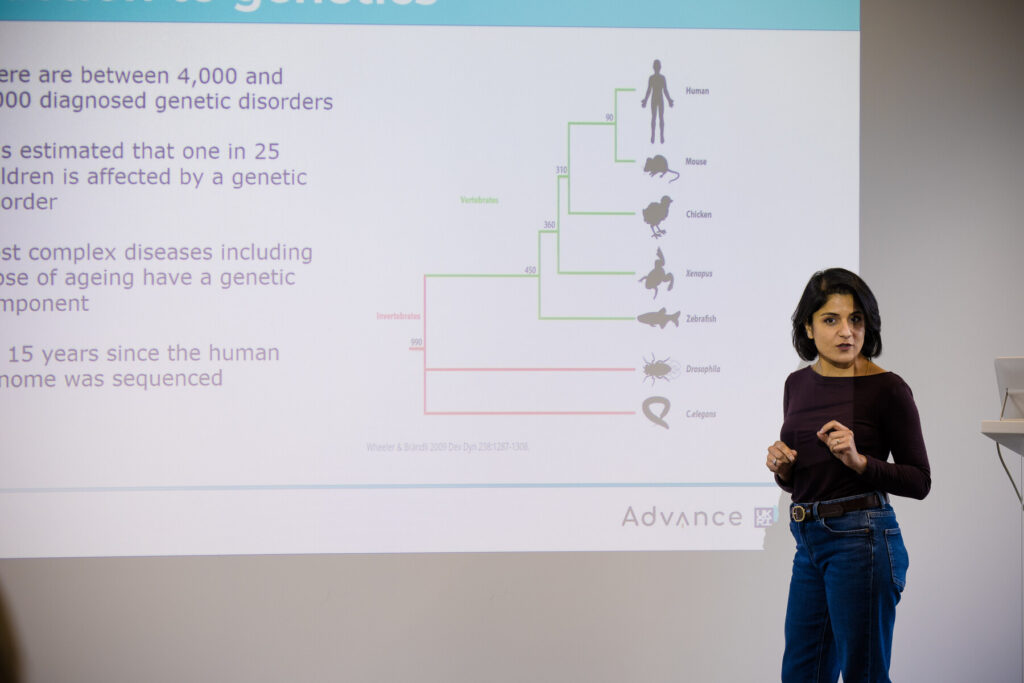
Lydia has over 25 years of experience of mouse genome engineering, with expertise in both classical and genome editing methods. She introduced the use of the CRISPR/Cas9 system at the MLC in 2013 and has employed these tools in both a high throughput process for the generation of null mice and a bespoke activity for the generation of point mutations and more complex mouse models. Her team has also defined quality control criteria and reliable protocols to validate mutants generated using CRISPR/Cas9 and classical tools. Lydia manages genome engineering activities and the development of new in vitro service platforms at the MLC. She has also helped to write the international guidelines for the reporting of the genetics of laboratory animals.

Through her involvement with the Advance Training Centre, Lydia brings extensive experience in molecular biology, helping to support the community in designing, creating and using genetically altered animals.

  • Genetics
  • Transgenics

Michelle Stewart

Scientific Manager at the Mary Lyon Centre at MRC Harwell

Degree in Cell and Molecular Biology; PhD in Neurobehavioural Genetics

Michelle Stewart is the Scientific Manager at the Mary Lyon Centre at MRC Harwell. She began her career at the MLC in 2004 as an animal technician, quickly progressing to NACWO and ward manager before taking on the role of Scientific Manager in 2013.

Alongside her professional duties, Michelle completed a part-time degree in Cell and Molecular Biology, followed by a PhD in Neurobehavioural Genetics, which she was awarded in 2019.

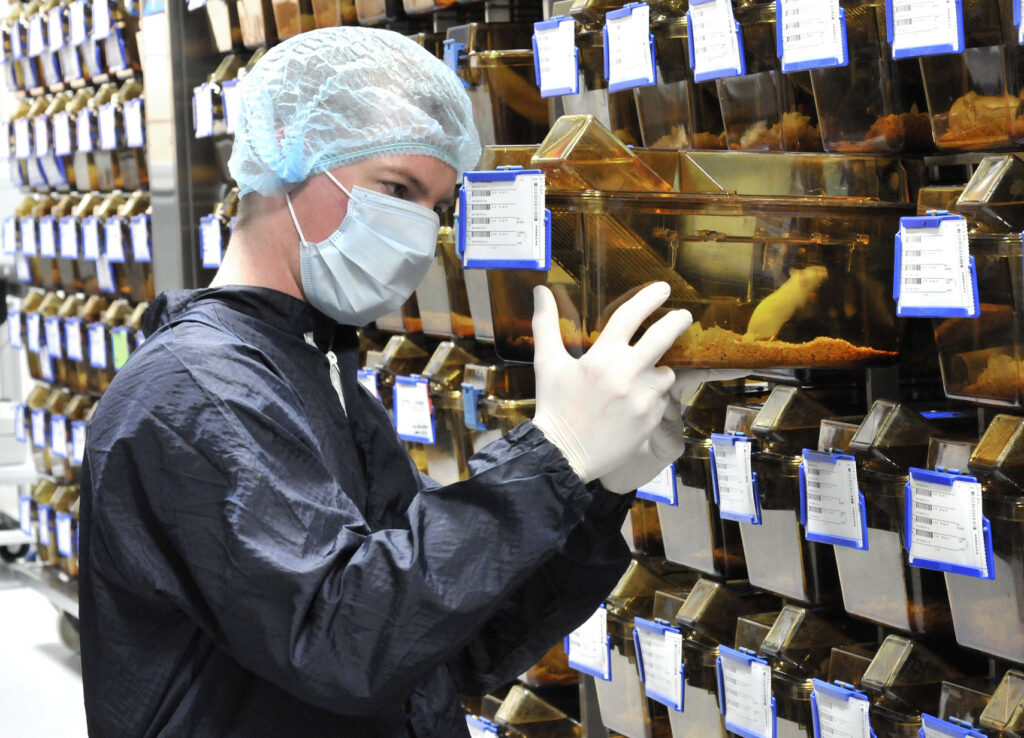
Michelle has more than 20 years of experience working with genetically altered mice, with particular expertise in complex breeding strategies, colony management, phenotyping, and all aspects of licensing. In her current role, she oversees the full operation of the animal facility at the Mary Lyon Centre, including husbandry, in-vivo studies such as dosing and phenotyping, gene delivery, and rederivation.

She works closely with both external researchers and internal teams to support and deliver high-quality in-vivo research for academic groups, biotech companies, and pharmaceutical partners across the UK. Michelle is deeply passionate about genetics and is committed to training and mentoring both animal technicians and researchers, promoting best practice and ensuring that the use of animals in research is conducted to the highest scientific and ethical standards.

What You Will Take Away

The course is designed to give learners practical outcomes they can carry back into their own work immediately.

Would recommend this course for any researchers about to undertake using Tg mice.

Understand the basic principles of conditional transgenesis

Understand how cre expressing and floxed alleles are produced and the potential impact on the experimental outcome

Identify the advantages and challenges of these systems

In Their Own Words

Questions

What should I bring?

Bring a notebook and any device you regularly use for work. We provide the equipment and materials needed for the practical sessions.

Is prior experience required?

The course is designed for learners who want to build or deepen practical capability. If you are unsure about your level, contact us and we can advise.

Do you offer group bookings?

Yes. We can discuss group bookings, scheduling, and practical requirements for teams or organisations.

Ready to Advance Your Practice?

Secure your place or register your interest today